
Description
Film faced plywood: the formwork panel that gets used more than once
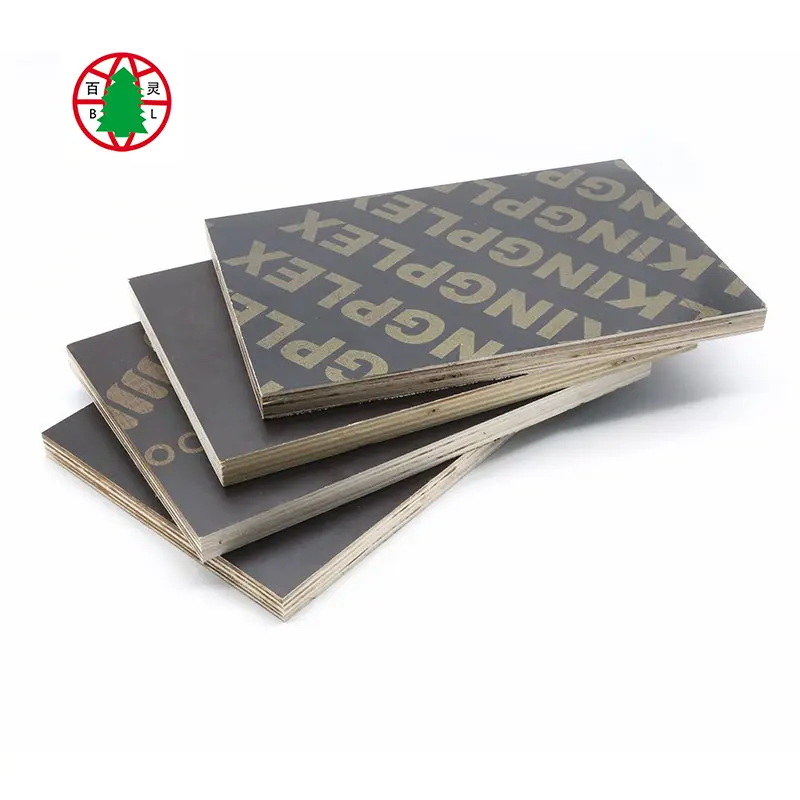
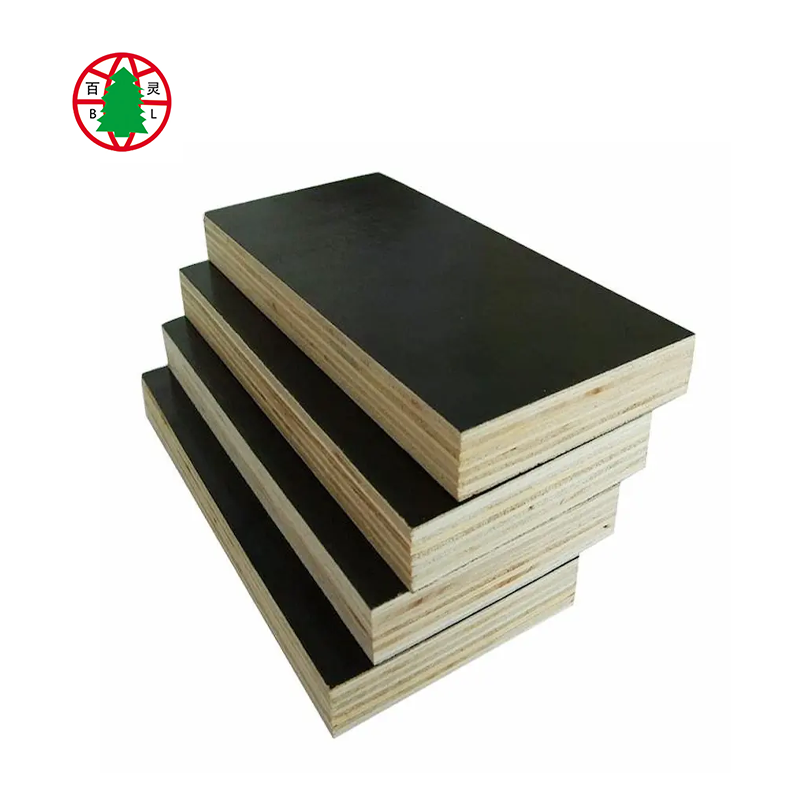
Film faced plywood carries a phenolic resin impregnated film bonded to both faces, which seals the timber against water and lets concrete release cleanly after each pour. It is the standard panel for concrete formwork, and — unlike most construction consumables — its economics depend entirely on how many pours it survives before the face gives up.
That number is driven by film weight. A 120 g/m² film gives roughly 6–8 pours. A 180 g/m² film gives around 10–15. A 240 g/m² film exceeds 20 pours with careful stripping and handling. Specifying film weight rather than “film faced plywood” is the difference between a panel that pays for itself and a panel that quietly becomes the most expensive line on the site budget.
Technical specification
| Panel size | 1220 × 2440 mm, 1250 × 2500 mm |
| Thickness | 2.5 – 30 mm; 12, 15, 18 and 21 mm are the volume sizes |
| Density | 500 – 630 kg/m³ |
| Core | Poplar, hardwood, birch or combi |
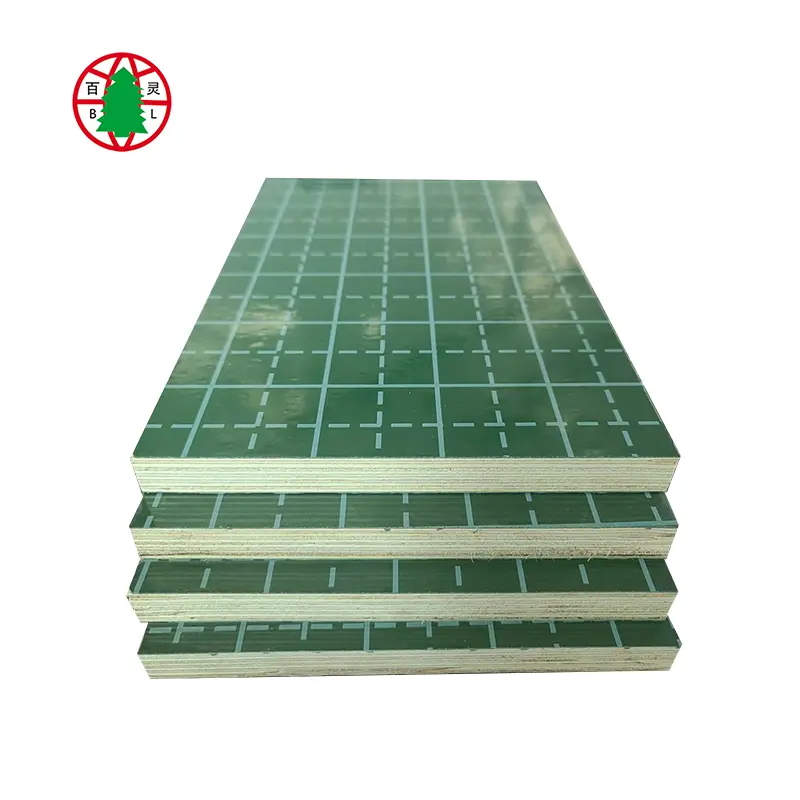
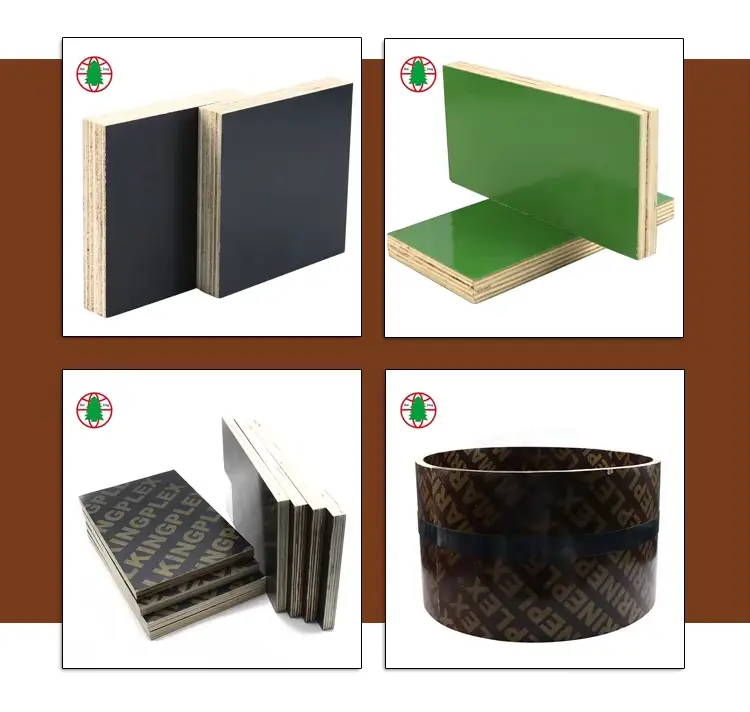
| Film | Black, brown, red or green, both faces |
| Surface | Smooth or anti-slip mesh |
| Adhesive | E0 / E1 / E2 / MR; WBP phenolic for formwork |
| Edge sealing | Water-based acrylic paint |
| Origin | Shouguang, Shandong, China |
Where it is used
- Concrete formwork for walls, columns, slabs and foundations — the primary application.
- Truck and trailer flooring, where a hard, weather-resistant face takes repeated loading.
- Container lining and repair.
- Scaffold boards and working platforms.
- Temporary fencing, hoarding and site signage.
- Outdoor structures and site facilities that need a panel to survive a wet season.
Getting more pours out of a panel
Reuse count is decided on site as much as in the factory. Three habits make the difference:
- Seal the edges. Water enters through an unsealed cut edge and travels along the veneer, which is what causes the face to lift. Every panel should be edge-sealed before first use, and re-sealed after trimming.
- Strip early and clean immediately. Concrete left on the face sets harder and takes release agent with it on the next pour.
- Stack flat on bearers. Panels stored on edge or on uneven ground take a permanent bow that shows up as a wave in the finished concrete.
Release agent should be applied to a clean face in a thin, even coat. Over-application collects dust and produces a mottled surface; under-application pulls film off with the concrete.
Film weight and the cost calculation
The cheapest panel per sheet is rarely the cheapest per pour. A 120 g/m² panel at 6–8 pours costs more per square metre of contact area than a 240 g/m² panel at 20+ pours, once the labour of stripping and re-fixing is counted. For a single small pour, light film is the sensible buy. For a multi-storey frame, specify the heavier film and treat the panels as capital equipment rather than consumables.
Ordering, packing and delivery
Standard MOQ is one 20GP container with 15–20 days production after deposit. Panels are packed with edge protection and shipped flat; tell us the intended pour count and surface finish (smooth or anti-slip mesh) at enquiry stage so the film weight can be matched to it.
Frequently asked questions
What film weight should I specify for formwork?
180 g/m² is the practical default for building work: around 10–15 pours, which covers most wall and slab cycles. Go to 240 g/m² for large frames where panels will be reused heavily, and 120 g/m² only for one-off or short-run pours.
Is film faced plywood waterproof?
The film resists water and the WBP glue withstands repeated wetting, but the panel is not a waterproof membrane. Unsealed edges and fixings are where water gets in. Seal edges and re-seal after cutting.
Can it be used for external cladding?
For temporary or site structures, yes. For permanent architectural cladding, a film faced panel is not the right product — the film is a release surface, not a decorative weather skin.
What is the difference between smooth and mesh faces?
Smooth film gives a fair-faced concrete finish and is the usual choice for exposed concrete. Mesh (anti-slip) film is for flooring and platform applications where grip matters more than finish.
Requesting a quotation
Send thickness, film weight, face type (smooth or mesh), quantity and destination port through the contact form. If you are choosing between film faced and other exterior panels, the film faced plywood range and the wider plywood range show what each grade is specified for.
Reviews
There are no reviews yet.