
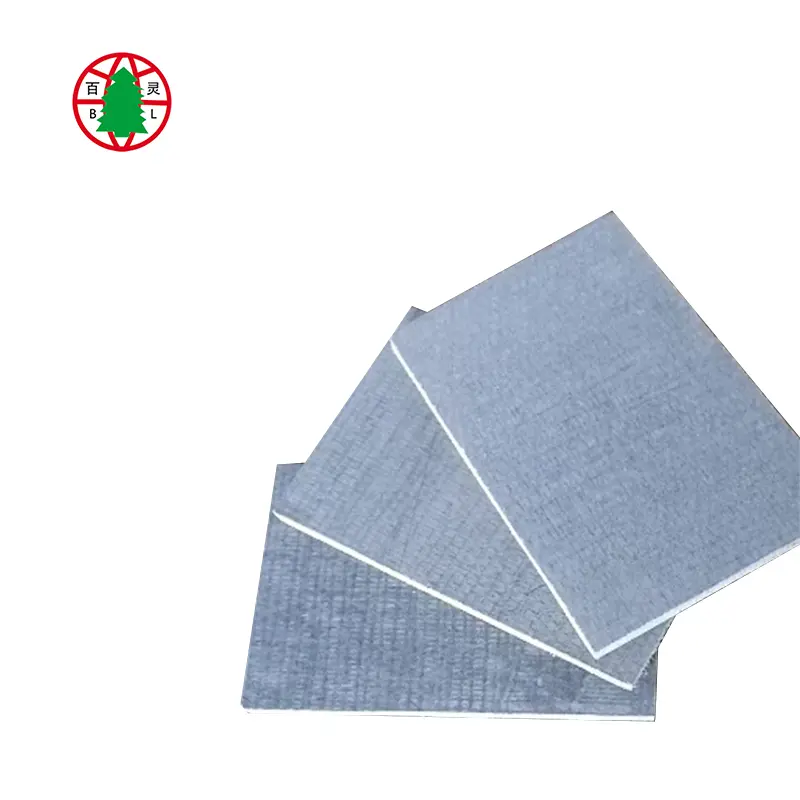
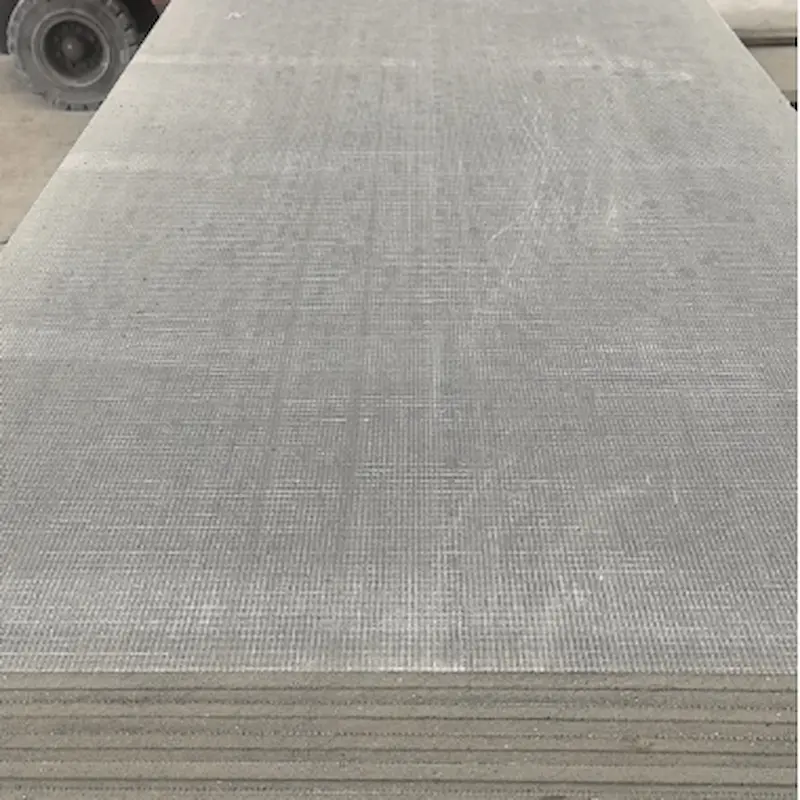
Description
Fibre cement board: the wet-area substrate that cannot rot
Cement board is a dense sheet of cement, sand and reinforcing cellulose fibre. There is no gypsum core and no paper facing, which is precisely the point: it cannot rot, it does not support mould, and it does not soften when it gets wet. Wherever moisture or fire rules out plasterboard — shower walls, wet rooms, kitchen splashbacks, external soffits, tile and stone substrates — this is the board the specification calls for.
It is also the board that costs the most to get wrong. Cement board is heavy, it is unforgiving to cut, and it must be installed with the right joint treatment or the tile above it will crack along a joint that was never properly taped.
Technical specification
| Composition | Cement, sand, cellulose reinforcing fibre |
| Thickness | 6 – 20 mm; 6, 8, 10 and 12 mm are the volume sizes |
| Panel size | 1200 × 2400 mm; up to 1220 × 3000 mm |
| Density | 1.2 – 1.6 g/cm³ |
| Water absorption | ≤ 28% |
| Moisture content | ≤ 10% |
| Surface | Smooth face for tiling; textured face for render and cladding |
| Edges | Square, bevelled or tapered |
| Colour | Grey or light yellow |
| Fire | Non-combustible |
| Warranty | 5 years |
Where cement board is specified
- Shower and wet room walls, as the tile substrate — the single largest application.
- Bathroom and kitchen splashbacks, where plasterboard would fail.
- Tile backer for floors, particularly timber substrates that move.
- External soffits, sheathing and cladding behind render.
- Fire-rated wall linings in commercial and multi-storey construction.
- Areas requiring pest resistance — the board does not attract termites or insects.
Installation: where these boards fail
Cement board failures are almost never material failures. They are joint failures and fixing failures.
- Stagger the joints and never land four corners together — that is where tile cracks begin.
- Tape and skim every joint with an alkali-resistant mesh tape and thin-set mortar. Untaped joints telegraph through tile and crack along the line.
- Fix with cement board screws at the manufacturer’s spacing, into studs at 300–400 mm centres for walls. The board is heavy; the framing has to carry it.
- Leave a small gap at the floor and seal it, rather than butting the board tight to a potentially wet floor.
Cutting produces silica dust, so score-and-snap with a carbide blade and cut outdoors or with extraction. Respiratory protection is not optional on a large cut.
Cement board against gypsum board
The two are not interchangeable. Gypsum board is lighter, faster to install, cheaper and easier to finish — it is the right product for dry interior partitions and ceilings. Cement board costs more, weighs roughly twice as much for the same thickness, and is specified only where moisture, impact or fire demands it. Using cement board everywhere is a waste of budget; using gypsum board in a shower is a callback waiting to happen.
Ordering, packing and delivery
Standard MOQ is one 20GP container with 15–20 days production after deposit. Boards are pallet packed with edge protection; because density is 1.2–1.6 g/cm³, shipments are weight-limited rather than volume-limited, which is worth factoring into freight cost before comparing against gypsum board.
Frequently asked questions
Is cement board completely waterproof?
It is water-resistant and will not rot or disintegrate, but it is not a waterproof membrane. In a shower, a tanking membrane over the board is still required behind tile.
Can cement board be used outdoors?
Yes, for soffits, sheathing and render substrates. For a directly exposed facade, a dedicated exterior cladding panel is the better specification.
How thick should tile backer board be?
6 mm for floor overlays on a sound substrate; 10–12 mm for walls where the board must also contribute stiffness. Heavier tile or wider stud spacing points to the thicker board.
Does it need a vapour barrier behind it?
In a wet room, yes — the membrane goes between the board and the tile. The board itself manages bulk water but not vapour.
Requesting a quotation
Send thickness, surface (smooth or textured), edge profile, quantity and destination port through the contact form. The full cement board range covers the thicknesses above.
Reviews
There are no reviews yet.