
When remodelling your kitchen, choosing between Melamine vs. Veneer Plywood Cabinets is a key decision that impacts the look, durability, and cost of your project. Melamine and Veneer plywood are two popular choices, each offering distinct advantages based on your design preferences and lifestyle needs. In this guide, we’ll help you weigh the benefits and considerations of both materials so that you can make the best choice for your home.

Melamine: The Cost-Effective and Durable Option
Melamine is widely used in cabinet construction due to its affordability and robust performance. Made by bonding a decorative layer to a particleboard core, melamine provides a smooth finish and comes in a variety of color options, including crisp whites and woodgrain prints.
Key Features of Melamine:
- Affordable: Melamine is a cost-effective option that delivers high performance without breaking the bank. This makes it an excellent choice for budget-conscious homeowners.
- Durable: Melamine’s hard surface is resistant to moisture and scratches, making it ideal for high-traffic kitchens where daily wear and tear is a concern. It’s particularly good at resisting standing liquids and stains.
- Low Maintenance: With its smooth, sealed surface, melamine cabinets are easy to clean and require minimal upkeep over time.
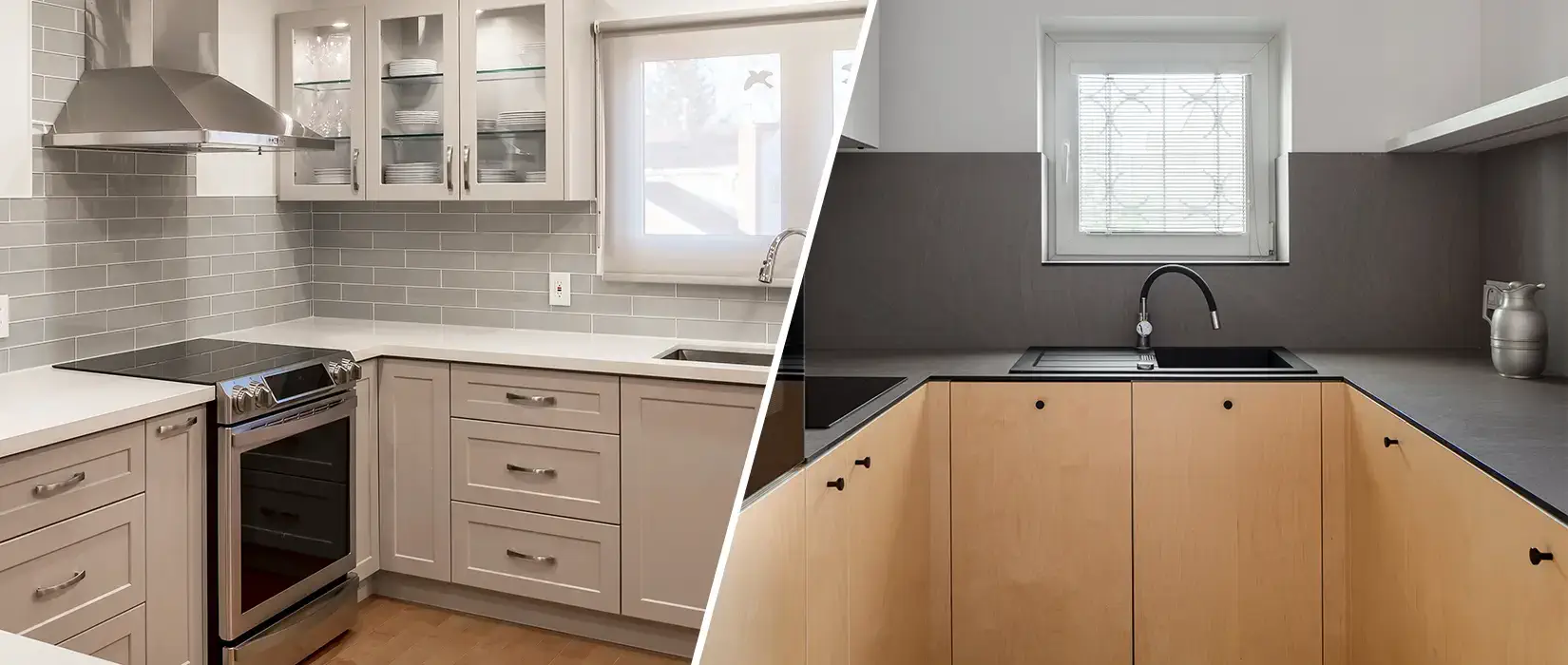
Considerations for Melamine:
- Weight: The particleboard core of melamine can make these cabinets heavier than plywood, which may pose challenges during installation.
- Strength: While melamine is durable, it can chip or crack if mishandled, especially along the edges. Extra care is needed during installation to avoid damage.
- Environmentally Stable: Melamine is less prone to warping, making it ideal for regions with fluctuating humidity levels.
Veneer Plywood: The Premium Choice for Timeless Appeal
For homeowners looking to invest in higher-end cabinetry, plywood offers a natural wood aesthetic with lasting durability. Plywood is made by layering thin sheets of wood together, creating a lightweight yet strong material that holds up well under pressure.
Key Features of Veneer Plywood:
- Natural Look: Plywood’s real wood grain adds a warm, organic feel to your kitchen, perfect for those who appreciate authenticity and timeless design.
- Lighter Weight: Plywood is significantly lighter than melamine, which can make installation quicker and easier, particularly in larger kitchens.
- Durability: Plywood is known for its strength, especially in structural components of the cabinet box. Furniture and cabinet manufacturers generally specify multi-layer plywood in the cabinet box for exactly this reason.
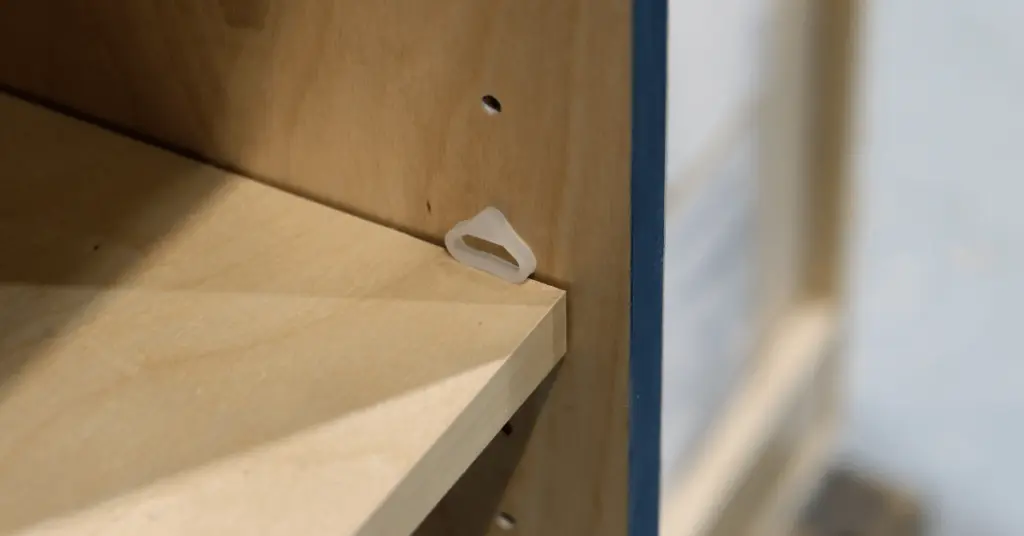
Considerations for Veneer Plywood:
- Higher Cost: Plywood is more expensive than melamine, often adding up to 20% more to your total cabinet cost. This premium price may be worth it for homeowners seeking natural aesthetics and high-end finishes.
- Potential Warping: Plywood can be more susceptible to warping in humid environments, making it important to maintain stable indoor conditions to preserve its longevity.
- Surface Imperfections: Due to the natural wood construction, plywood can feature knots and grain variations, which can be an advantage or disadvantage, depending on what you value.
Which Material is Right for Your Kitchen?
The decision between melamine and plywood ultimately comes down to your priorities—whether it’s budget, durability, or aesthetics. If you’re working with a tight budget or need a durable solution for a busy family kitchen, melamine might be your best bet. Its low cost and high resistance to daily wear make it a practical choice for many American households.
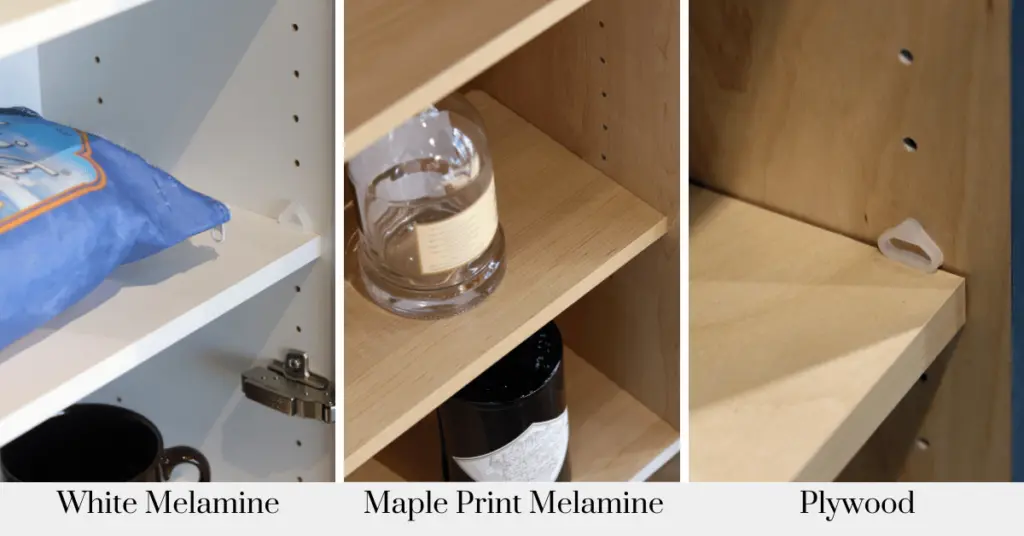
Alternatively, suppose you’re seeking a luxurious, natural look for your dream kitchen and are willing to invest in premium materials. In that case, plywood offers the beauty and strength that make it worth the extra cost. With its warm wood grain and lightweight construction, plywood can add an elevated touch to your home.
Expert Advice for Your Cabinet Decision
Every kitchen renovation is different, and the right cabinet construction depends on where the cabinets will sit rather than on a single “best” material. For a run that will see steam and splashes — under a sink, beside a hob, around a dishwasher — plywood with an MR glue line is the safer core. For bedrooms, studies and dry storage, melamine-faced board gives the same service life at a lower cost per square metre.
The practical way to decide is to list, room by room, which cabinets will be exposed to moisture and which will not, then specify each run separately. That usually means a mixed order rather than one board throughout, and it is the single change that most reduces callbacks after the first wet season.
If you are sourcing the panels rather than the finished cabinets, tell us the application and the climate at the destination and we will quote the core and glue line that suits it. Start with the contact form, or see the plywood range and the MDF range for the board specifications behind each option.
Shouguang Bailing Wood Industry Co., Ltd.
Professional manufacturer of MDF, plywood, block board & decorative panels
📧 Email: bailing@bailingwoods.com
📱 WhatsApp: +86 131 5688 9006
🌐 Website: bailingwooden.com
📍 Factory: Shouguang City, Shandong Province, China