
Description
PET MDF: film-faced board for handle-less and slab-door furniture
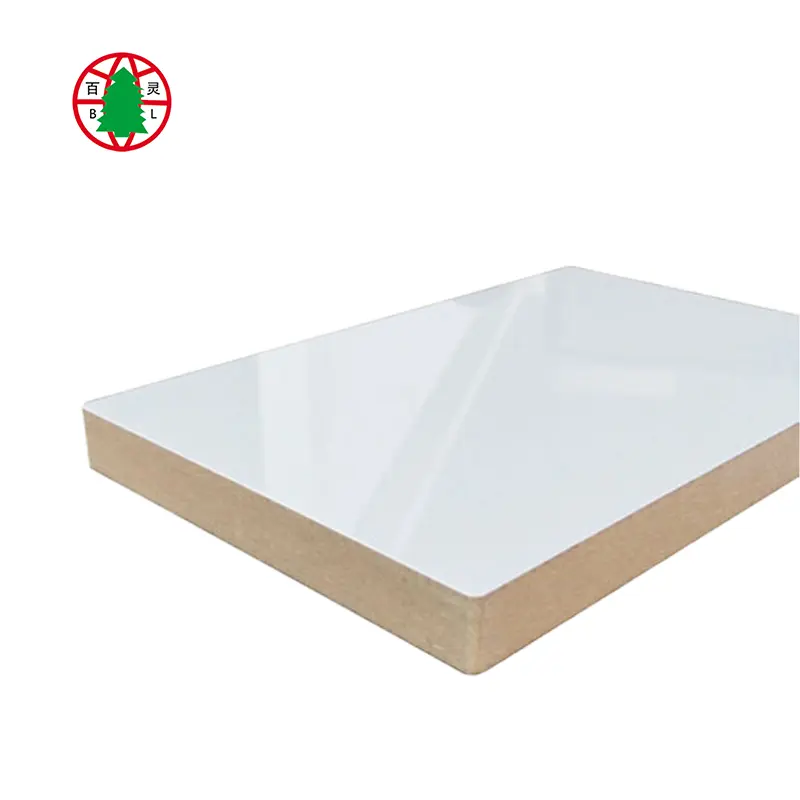
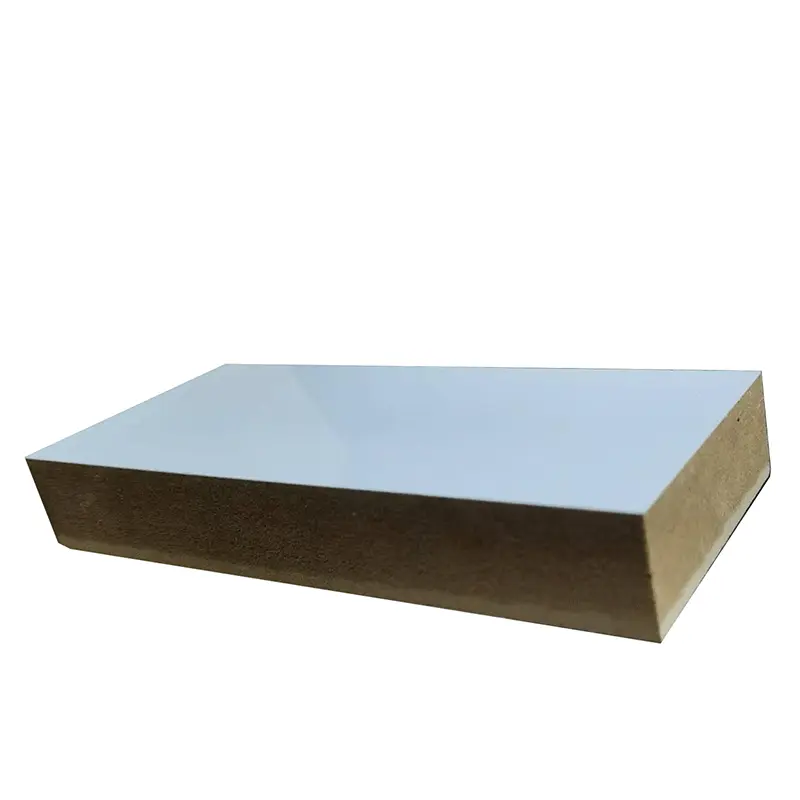
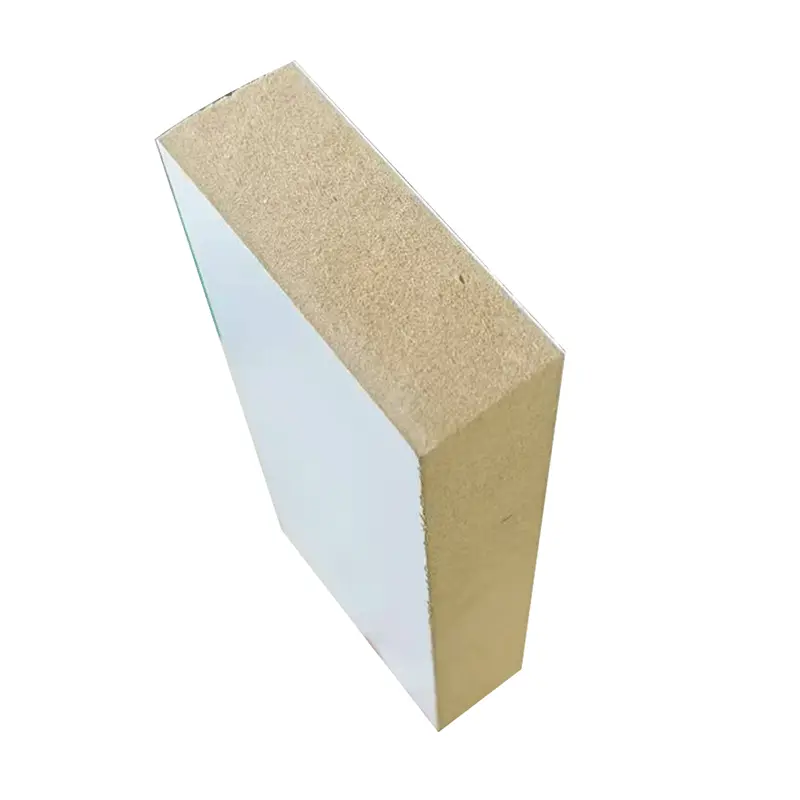
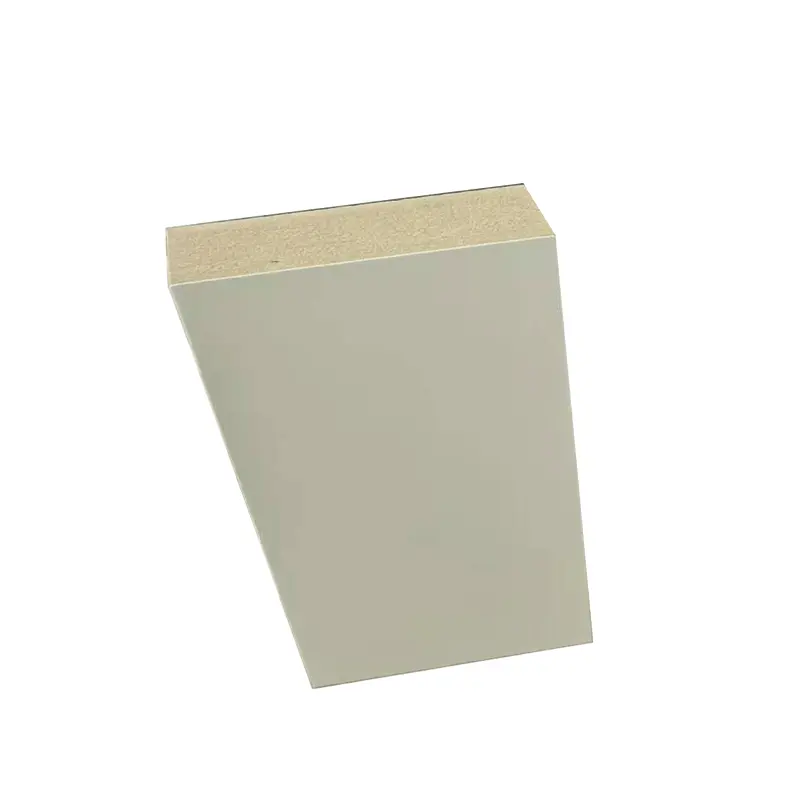
PET MDF is a medium density fibreboard core laminated with a PET (polyethylene terephthalate) film. The film is the same family of material used for food-safe packaging, which is why it turns up so often in kitchen and bathroom furniture: it is hard-wearing, resistant to water and staining, and it does not need edge banding to look finished. Where a melamine face reads as “office furniture”, a matte PET face reads as “designed”.
The practical advantage over melamine is at the edge. PET film is pressed and wrapped so the face and edge form one continuous surface on a machined panel — no banding line, no colour mismatch between panel and edge, and no place for moisture to start. That is what makes it the usual choice for handle-less slab doors and wrap-around carcass panels.
Technical specification
| Panel size | 1220 × 2440 mm |
| Thickness | 2 – 25 mm |
| Density | 680 – 830 kg/m³ |
| Face | PET film — matte, high gloss or woodgrain texture |
| Adhesive | E1 / E2 |
| Surface properties | Scratch, moisture and stain resistant; wipe clean |
| Grade | First class |
| Reference | BL004 |
| Origin | Shouguang, Shandong, China |
Where PET is worth the premium
- Handle-less and J-profile kitchen doors. The wrapped edge is the whole point — the machined profile is faced in the same film as the panel.
- Bathroom vanities and laundry units. The film resists water at the surface; the core still needs to be a moisture-resistant grade if the environment is genuinely wet.
- Wardrobes and closet systems where internal and external faces must match exactly.
- Office and retail interiors wanting a matte finish that does not fingerprint the way gloss does.
- Slab doors and drawer fronts in modern interiors where the edge detail is visible and a banding line would spoil it.
Matte, gloss or woodgrain
Matte PET is the current default for kitchens: it hides fingerprints, reads softly under lighting, and does not show the micro-scratches that appear on gloss after a year of wiping. High gloss gives a lacquered look and reflects light, which suits small rooms, but it is unforgiving on surface defects and shows every mark. Woodgrain textures give a natural look with the durability of film rather than veneer.
If the project wants the depth of a real timber face, veneer faced block board is the honest alternative; PET is a film and reads as a film.
Working with PET-faced panels
Cut with a sharp blade and score the face side if your saw allows it. The film chips at the cut if the tooling is dull, and a chip in a wrapped edge cannot be repaired invisibly. For the wrapped edges, the film is applied to the machined profile during production, so the profile detail has to be confirmed at order stage — a J-profile, a quarter-round and a square edge all require different tooling.
Fixing is straightforward: the panel takes standard carcass fittings, and because the face is non-porous, no sealing is needed on the surface. Cut edges that are not wrapped should still be sealed.
Ordering, packing and delivery
Standard MOQ is one 20GP container with 15–20 days production after deposit. Panels ship on export pallets with corner protection; the loading plan is issued with the quotation. Colour samples can be arranged before the order is confirmed.
Frequently asked questions
What is the difference between PET and melamine?
Both are decorative films on an MDF core. PET is a thicker, tougher film that can be wrapped around a machined edge, so face and edge match without banding. Melamine is a paper-based face applied flat and normally banded at the edge. PET costs more and performs better at the edge.
Is PET MDF suitable for a kitchen?
Yes, for door and drawer fronts and for carcass panels provided the core is a moisture-resistant grade in wet zones. The film resists surface water; the core is what determines whether a cut edge swells.
Can PET be repaired if scratched?
Light marks clean off with a soft cloth. Deep scratches in the film cannot be polished out the way a lacquer can — the affected panel or door would need replacing, which is worth knowing before specifying it for a high-traffic commercial surface.
Which is better, PET or UV lacquer?
UV lacquer gives a harder, glossier surface with a lacquered feel; PET gives a consistent matte film with a wrapped edge. See UV MDF for the lacquer option and compare against the application.
Requesting a quotation
Send thickness, finish (matte, gloss or woodgrain), colour reference, quantity and destination port through the contact form. The full MDF range lists every faced option if you are still choosing between PET, melamine and UV.
Reviews
There are no reviews yet.