
Description
UV MDF: a lacquered finish cured in seconds, not days
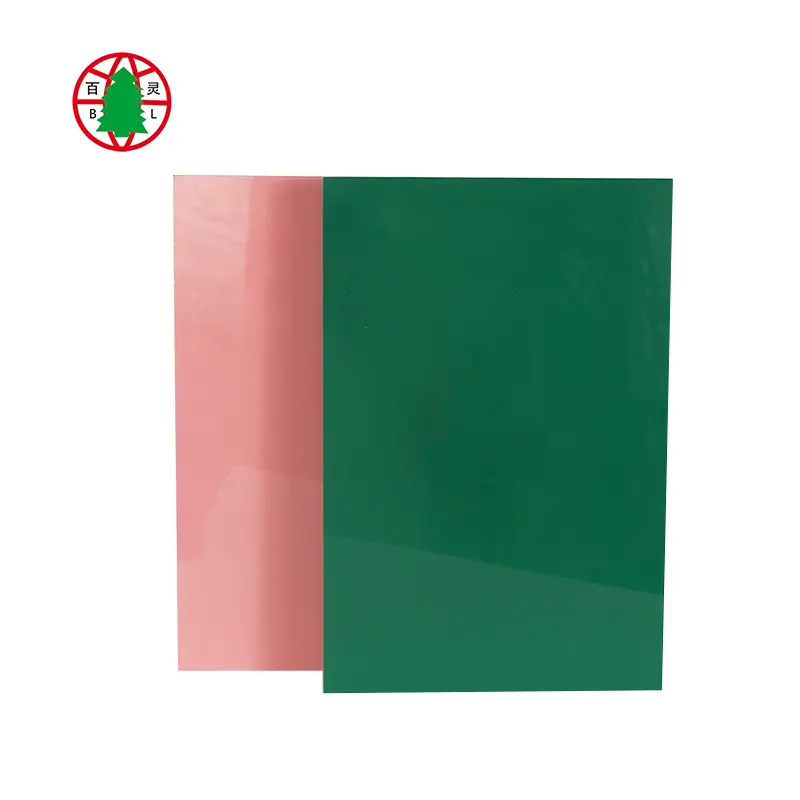
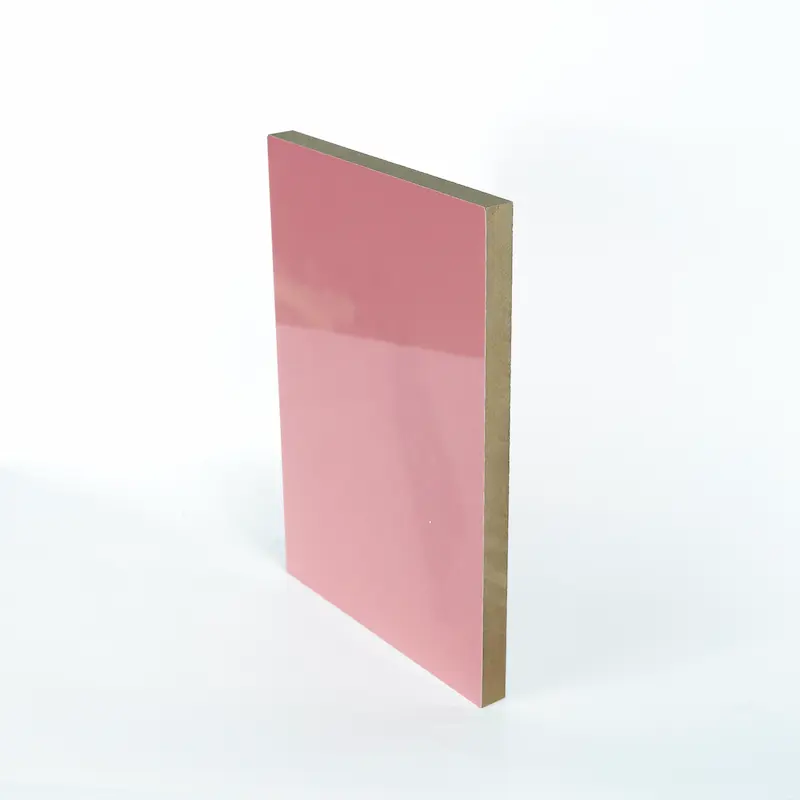
UV MDF carries a lacquer that is cured under ultraviolet light rather than by evaporation or chemical hardener. The panel leaves the line with a fully cured, high-gloss or matte surface that needs no drying time, no polishing and no re-coating on site. For furniture makers, that means a finished panel can be cut, assembled and shipped the same day — the finishing shop stops being the bottleneck.
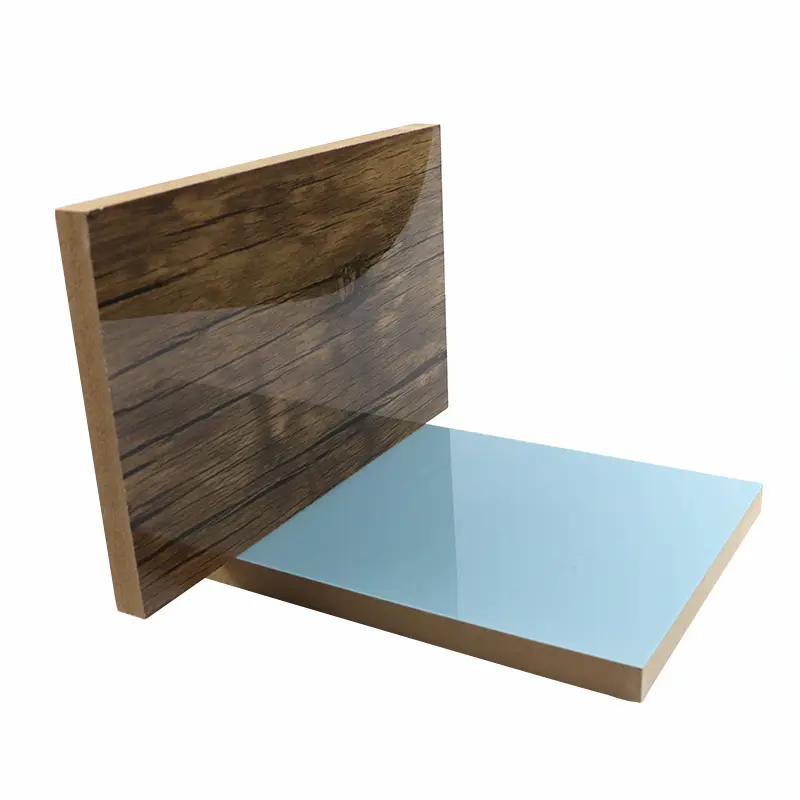
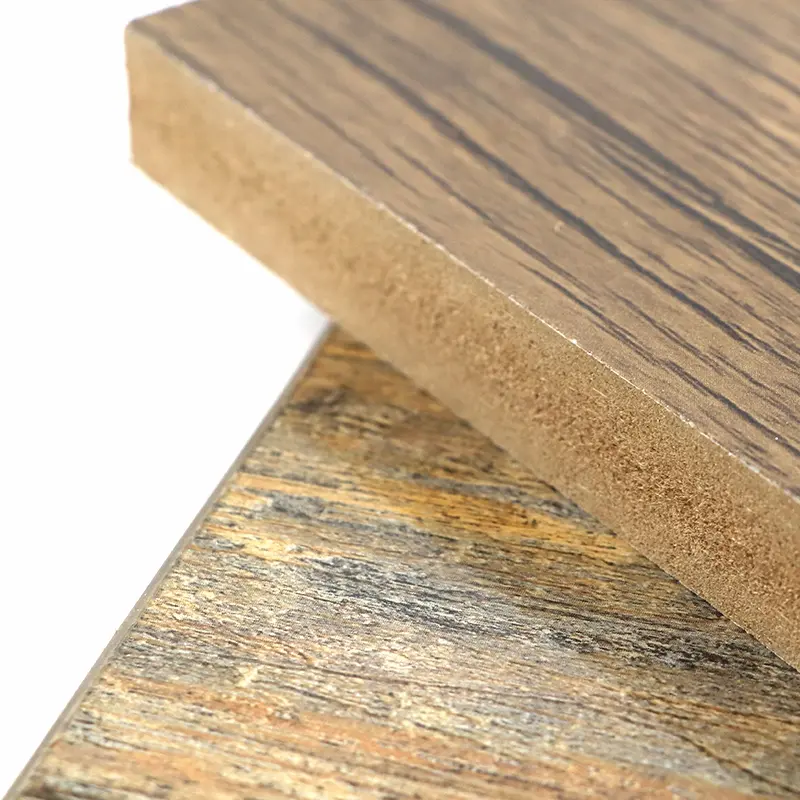
Cured UV lacquer is harder than a conventional two-pack lacquer. It resists scratching, water marking and fading, holds its gloss level across a run, and can be ordered in solid colours or woodgrain prints. Where a project needs a clean lacquered look without the lead time of a spray shop, this is the panel that gets specified.
Technical specification
| Panel size | 1220 × 2440 mm |
| Thickness | 5 – 30 mm |
| Density | 650 – 750 kg/m³ |
| Core | Poplar, pine, combi |
| Adhesive | MR, E0, E1, WBP |
| Finish | UV-cured lacquer — high gloss or matte |
| Colour | Solid colour or woodgrain |
| Certification | ISO 9001, CARB |
| Packing | Pallet or loose packing |
| Origin | Shouguang, Shandong, China |
Where UV panels make the difference
- Kitchen and bathroom door fronts in gloss white or matte colour, where a spray shop would otherwise set the schedule.
- Wardrobe doors and internal panels needing a consistent colour across a multi-unit order.
- Office furniture and reception joinery — the lacquered surface takes commercial wear without a repaint cycle.
- Retail fixtures where gloss level consistency between panels is part of the brand standard.
- Wall panels and feature linings with a design intent that depends on a smooth, uniform sheen.
Gloss, matte and the reality of both
High gloss gives depth and reflects light, and it is the harder surface of the two. It is also unforgiving: any flatness variation in the core telegraphs through the lacquer, which is why UV board quality depends on the core being properly calibrated before coating. Matte finishes hide minor surface deviation and fingerprints, and are the more practical choice for large surfaces and high-traffic areas.
Both resist moisture at the surface, but neither seals the core. Edges still need sealing or banding; a gloss face on an unsealed edge will still swell if water reaches the fibre.
Cutting and edge treatment
UV-coated panels cut cleanly with sharp tooling, but the coating is brittle relative to melamine or PET — a blunt blade produces a visible chip line along the cut that no touch-up pen will hide. Cut from the back face where possible, use a scoring blade, and keep the protective film on until assembly if the panels will be handled on site.
Banding should be colour matched and, for gloss finishes, ordered from the same batch as the panels. Matt lacquered edges can also be sealed and painted, which is the usual approach for shaped components that cannot be banded.
Comparing the faced options
UV lacquer gives the hardest, most lacquered look; PET MDF gives a wrapped film edge for handle-less doors; melamine faced MDF is the economical option for carcass interiors. All three use the same MDF core, so the choice is about the face and the edge, not the board.
Ordering, packing and delivery
Standard MOQ is one 20GP container with 15–20 days production after deposit, 30% deposit and 70% balance against documents. Panels can be pallet packed or loose packed depending on the destination and handling at site.
Frequently asked questions
Is UV MDF the same as UV-coated plywood?
No. The coating technology is the same, but the substrate differs — MDF for a uniform, fine surface, plywood where structural strength or screw-holding at the edge is needed. For flat panel furniture, MDF is the usual substrate.
Can UV MDF be used in a bathroom?
The lacquered face handles humidity well. The core still needs a moisture-resistant grade for a genuinely wet room, and cut edges must be sealed. Ask for the MR core when ordering for bathroom work.
How does UV compare with a sprayed lacquer finish?
UV curing produces a harder film with better consistency and no drying time, so panels can be handled immediately. Sprayed lacquer allows more custom colour matching and touch-up on site. For volume production of flat panels, UV is faster and more uniform.
What thicknesses are standard?
5–30 mm across the range, with 18 mm the volume thickness for door fronts and carcasses. Thin panels below 9 mm are common for drawer fronts and decorative facing.
Requesting a quotation
Send thickness, finish (gloss or matte), colour reference, quantity and destination port through the contact form. Samples of gloss level and colour can be arranged before the order is confirmed. The full MDF range lists every faced option.
Reviews
There are no reviews yet.