
Description
Melamine faced MDF: a finished surface straight off the pallet
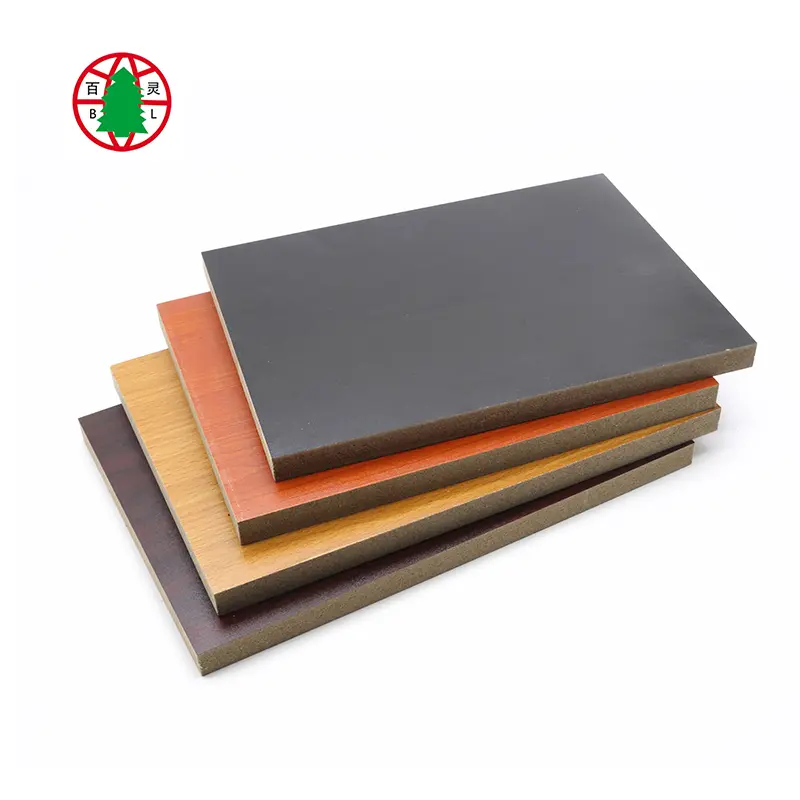
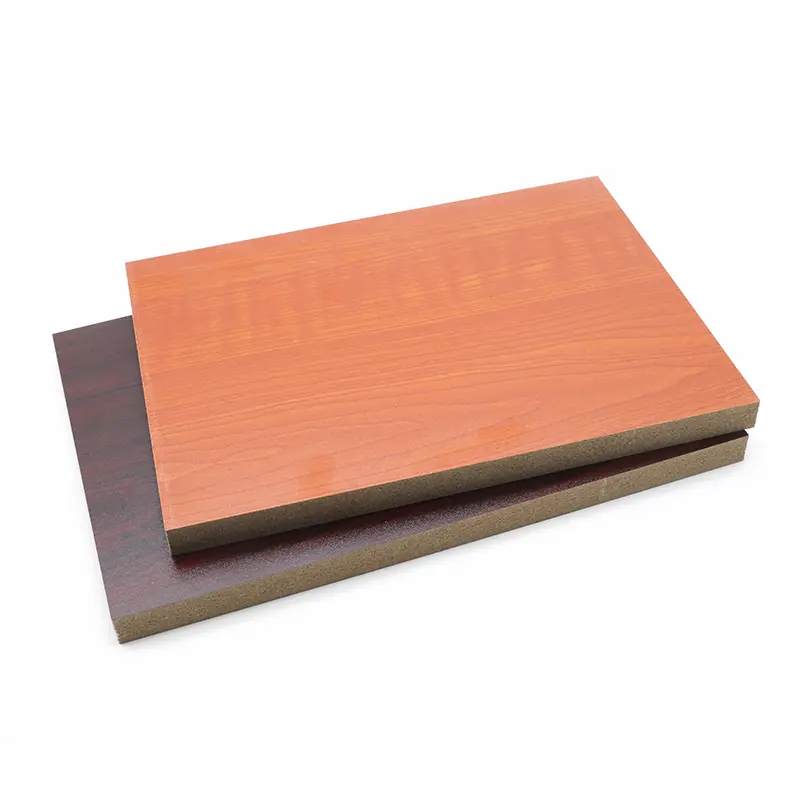
Melamine MDF is our standard MDF core with a melamine-impregnated paper fused to both faces under heat and pressure. The result is a panel that arrives finished: no priming, no painting, no veneering, and a surface that wipes clean. For furniture factories and shopfitters working to a deadline, the value is not that the panel looks better — it is that an entire finishing stage disappears from the production line.
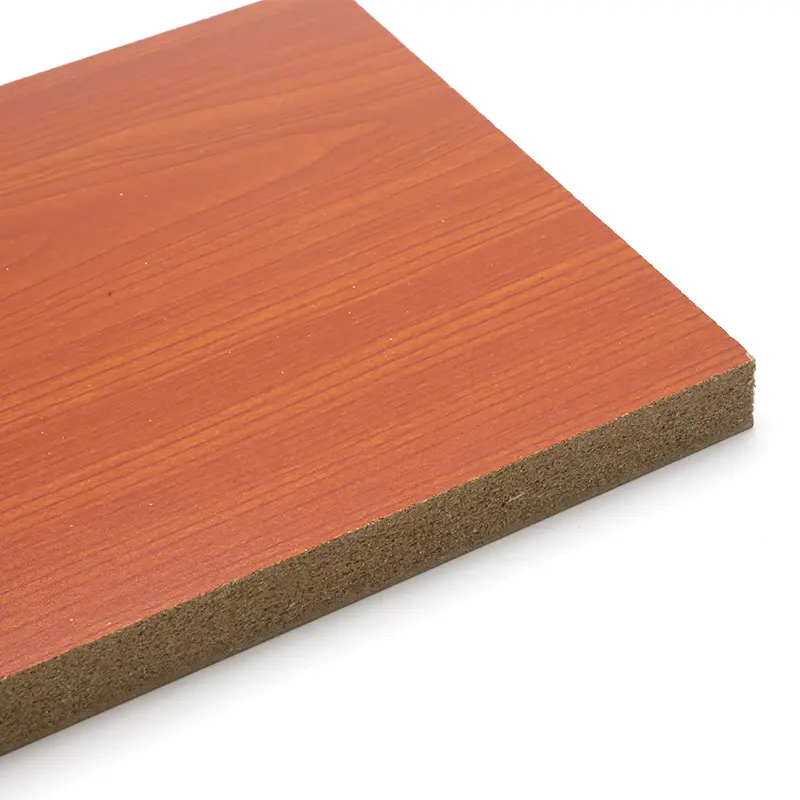
The face is a melamine resin paper, not a laminate. It resists scratches, water marks and everyday staining well enough for horizontal surfaces in offices and retail, and it takes a router and an edge bander without chipping at the cut if the tooling is sharp. At 680–830 kg/m³ the core is dense enough that the paper does not telegraph the fibre texture through the face — the defect that makes cheap melamine look cheap.
Technical specification
| Panel size | 1220 × 2440 mm |
| Thickness | 2.5 – 25 mm |
| Density | 680 – 830 kg/m³ |
| Face and back | Melamine-impregnated paper, both sides |
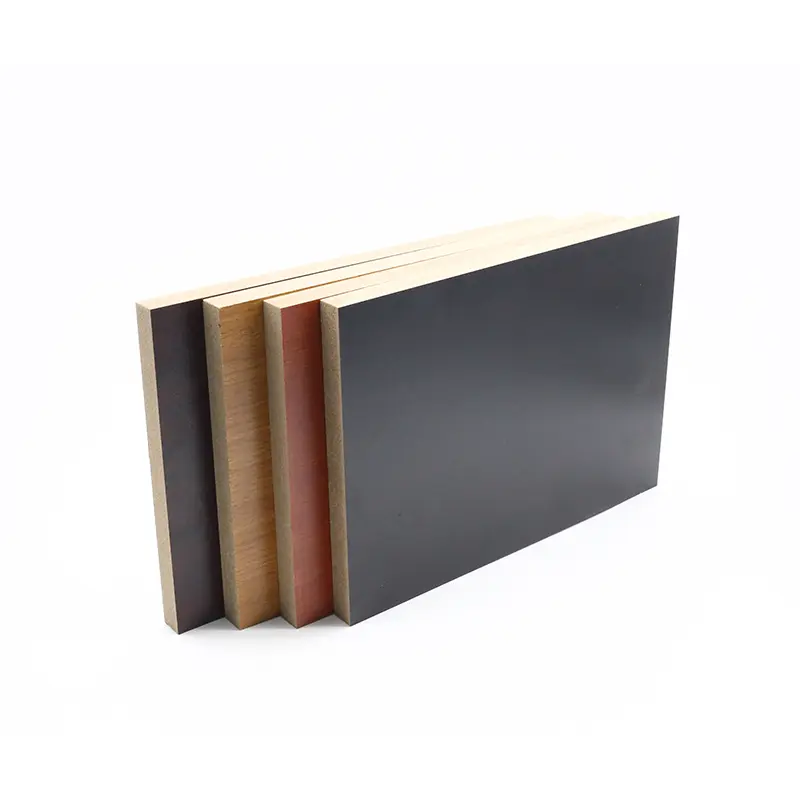
| Colours | Titanium white, beech, cherry and the wider woodgrain / solid range |
| Adhesive | E1 / E2 |
| Moisture content | 8 – 12% |
| Grade | First class |
| Origin | Shouguang, Shandong, China |
Where it saves the most time
- Kitchen and bathroom cabinet doors. White melamine remains the volume seller for carcasses and internal panels.
- Wardrobe and closet interiors. Wipe-clean shelves and dividers without a separate finishing step.
- Office and commercial furniture. Desking, storage walls and reception counters in woodgrain or solid colour.
- Interior wall panels and partitions where a colour-matched finish matters more than a natural veneer.
- Retail fixtures and display units — colour consistency across repeat orders is far easier to control with paper than with paint.
Cutting, banding and matching
Cut with a sharp, undamaged blade and score the face side if your saw is set up for it; a dull blade chips the melamine before it cuts the fibre, and the chip is permanent. Edge banding should be colour matched to the face, and we can supply matching banding with the order so the panel and the edge come from the same batch.
Two practical points for specifiers: paper shade varies slightly between production runs, so keep one batch for a single project rather than topping up mid-fit; and melamine faces are not uv-stable outdoors. For exterior work use film faced plywood instead.
Grades and the moisture question
If the panel is going into a kitchen, bathroom or an unventilated wardrobe back, specify the moisture-resistant green core rather than standard board — the melamine face resists water, but the core behind a cut edge does not. See HMR MDF for the moisture-resistant option, or melamine particle board if the budget points that way and the application is vertical.
Ordering, packing and delivery
Standard MOQ is one 20GP container, production 15–20 days after deposit, balance before shipment. Panels are packed on export pallets with corner protection; a loading plan is issued with the quotation so the sheet count, weight and volume are agreed before production starts.
Frequently asked questions
Is melamine MDF the same as laminate?
No. Melamine is a resin-impregnated paper bonded directly to the board; laminate is a thicker, separately manufactured sheet glued on afterwards. Melamine is thinner, cheaper and adequate for most vertical and light horizontal surfaces. Laminate takes harder wear.
Can the edges be left unfinished?
On a carcass interior, an unfinished edge is visible and will absorb moisture. We recommend banding all exposed edges, and we can supply matching banding from the same production batch.
Which thickness should I use for shelves?
18 mm is standard for shelving up to about 900 mm span; beyond that, either drop the span or move to 25 mm. MDF creeps under sustained load, so a shelf designed at the limit will sag over a year or two.
Do you supply samples?
Yes — colour and texture samples can be arranged before an order is placed. Tell us the decor code or send a photograph of the finish you are matching.
Requesting a quotation
Send thickness, colour or decor reference, quantity and destination port through the contact form. If you are comparing melamine against PET or UV finishes, the full MDF range lists what each one is suited to.
Reviews
There are no reviews yet.