
Description
Melamine particle board: the workhorse panel of flat-pack furniture
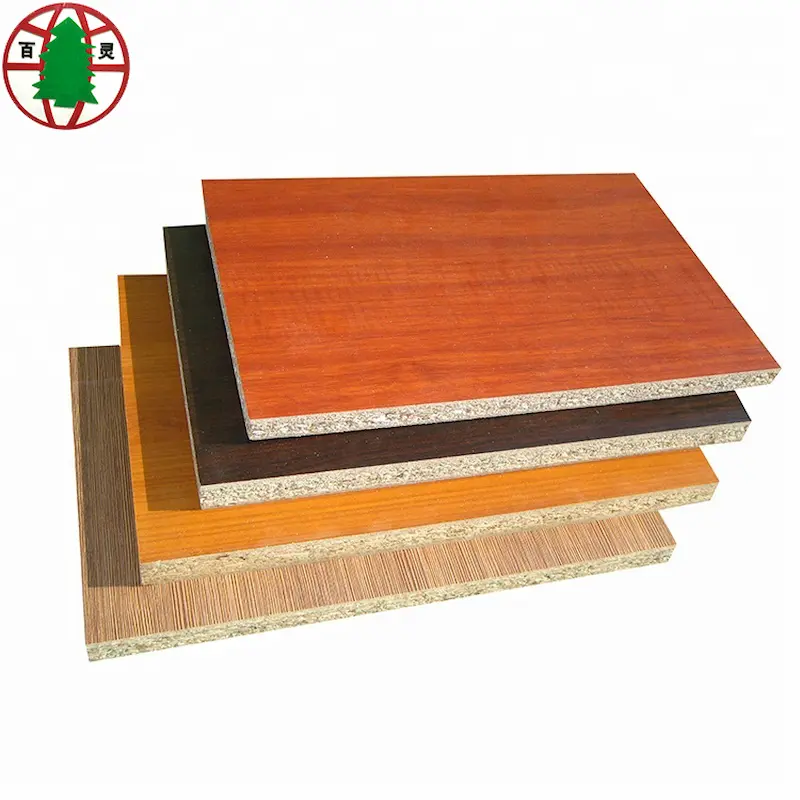
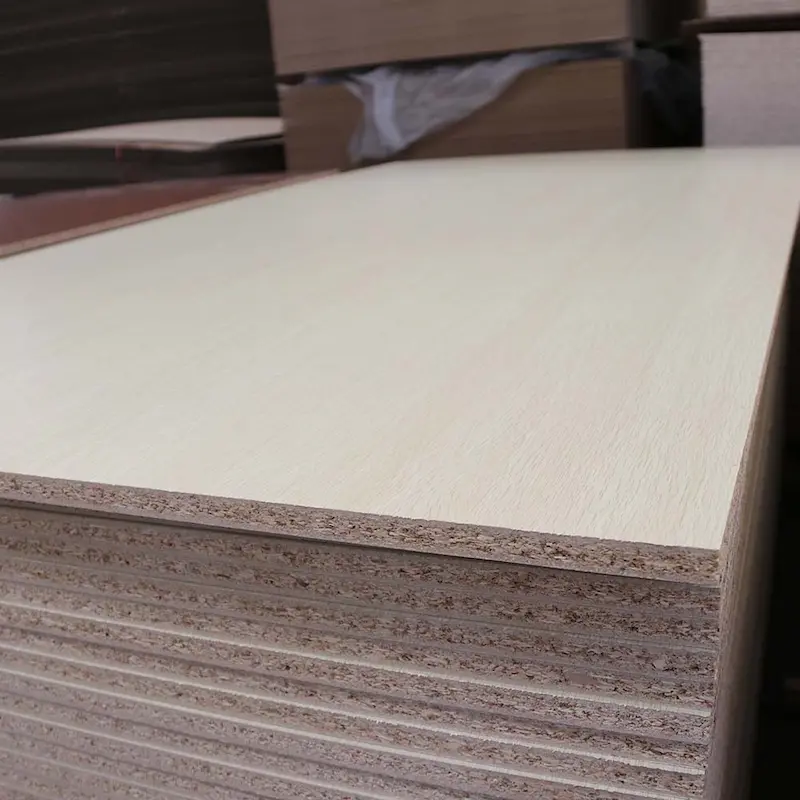
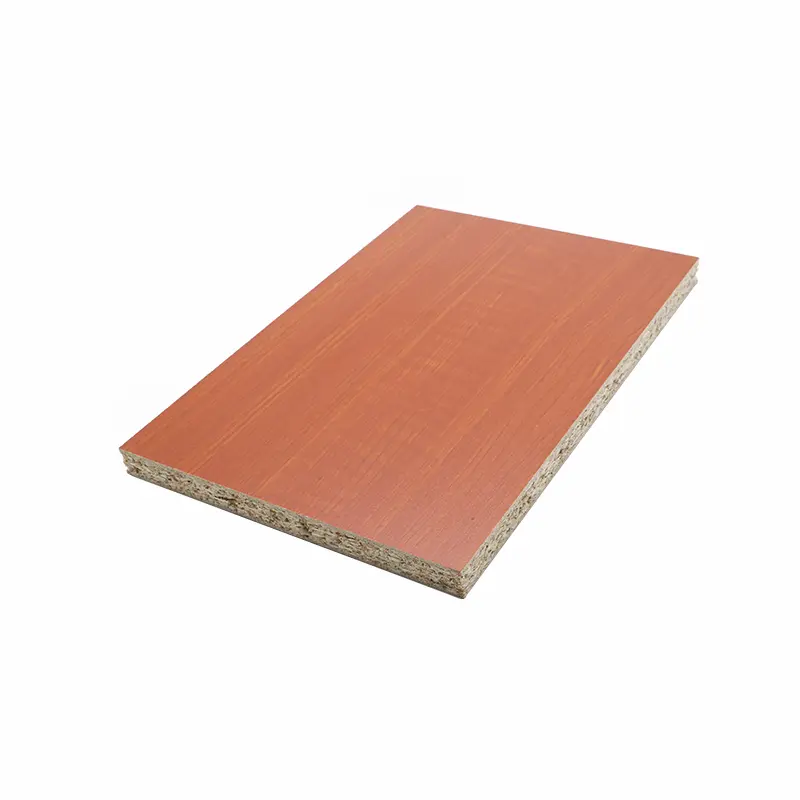
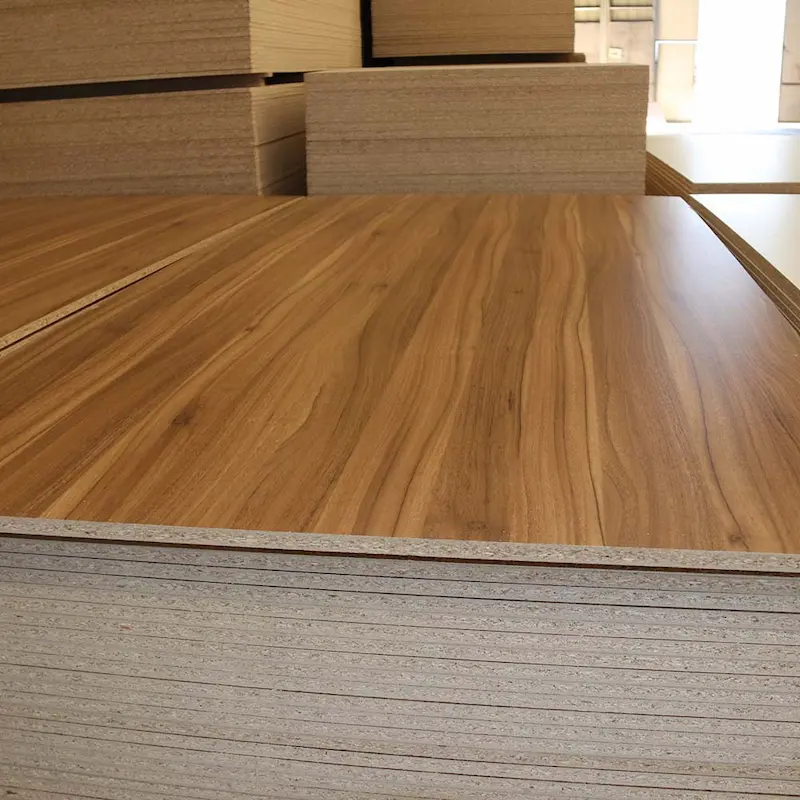
Melamine particle board is the panel that most of the world’s flat-pack furniture is made from. Wood particles are bonded with resin under heat and pressure, sanded flat, then faced with a decorative melamine paper on both sides. It is the cheapest of the engineered boards, and for vertical panels and light shelving it is entirely adequate — which is why it dominates the market despite every competitor claiming to be better.
What separates good melamine particle board from bad is the surface and the density. A panel sanded to a tight tolerance takes the melamine paper without the chip texture telegraphing through the face; a panel with uneven density shows exactly that, and no amount of decor paper hides it. At 600–700 kg/m³ with a properly calibrated face, the result looks as flat as a much more expensive panel.
Technical specification
| Panel size | 1220 × 2440 mm, 1250 × 2500 mm |
| Thickness | 9 – 25 mm |
| Density | 600 – 700 kg/m³ |
| Core | Wood particles — poplar or hardwood — bonded with resin |
| Face and back | Melamine-impregnated paper, both sides, balanced |
| Adhesive | E0 / E1 / E2; MR available |
| Surface properties | Resistant to scratches, moisture, stains and heat; wipe clean |
| Origin | Shouguang, Shandong, China |
Where it is the right buy
- Flat-pack furniture — carcasses, sides, tops and backs where cost per square metre decides the product.
- Kitchen and wardrobe carcasses with the interior left in a light decor.
- Shelving and storage walls at spans under about 800 mm.
- Office furniture and desk screens.
- Shop fitting and exhibition work where panels are used once for a fit-out cycle.
Where it should not be used
Particle board has two honest limitations, and specifying around them is what separates a fit-out that lasts from one that comes back.
- Edge fixings. The core is chips, so a screw into the edge pulls out. Carcass assembly should use cam-and-dowel fittings or confirmats into the face, not chipboard screws into the edge.
- Water. A cut edge exposed to water swells and does not recover. Every edge in a wet zone must be banded, and a moisture-resistant core should be specified for kitchens and bathrooms rather than relying on the melamine face alone.
Where the panel will be loaded — shelves over a long span, worktops, bench seating — block board carries the load better at similar weight, and melamine block board gives the same finished face on a solid core.
Cutting and banding
Cut with sharp tooling; the melamine chips if the blade is dull, and a chipped edge on a decor finish is permanent. Band all exposed edges with colour-matched banding, ideally from the same production batch so the decor matches. For carcass interiors, pre-glued banding applied with a hot-air edge bander gives a fast, adequate result; for visible edges on doors and tops, a thicker ABS banding is the better choice.
Ordering, packing and delivery
Standard MOQ is one 20GP container, production 15–20 days after deposit, 30% deposit and 70% balance against documents. Panels are shipped on edge-protected pallets to prevent corner damage, with a loading plan issued alongside the quotation.
Frequently asked questions
Is melamine particle board strong enough for a kitchen?
For carcasses and vertical panels, yes, in a moisture-resistant grade with all edges banded. For worktops and any horizontal surface carrying load, use a denser substrate.
How does it compare with melamine MDF?
Particle board is cheaper and lighter; MDF is denser, machines to a cleaner profile and holds a screw in the face better. For painted or routed work, MDF wins; for cost-driven flat panel furniture, particle board wins.
What thickness should I use?
18 mm for carcasses and shelving, 25 mm for tops and visible horizontal surfaces, 9–12 mm for backs and drawer bottoms.
Can it be used in a bathroom?
With MR glue and fully banded edges, for vanity carcasses in a ventilated room. For a constantly wet area, cement board or a moisture-resistant MDF is the safer substrate.
Requesting a quotation
Send thickness, decor reference, quantity and destination port through the contact form. The full particle board range covers flat panel, hollow core and melamine faced options, and melamine MDF is the equivalent product on a fibre core.
Reviews
There are no reviews yet.