


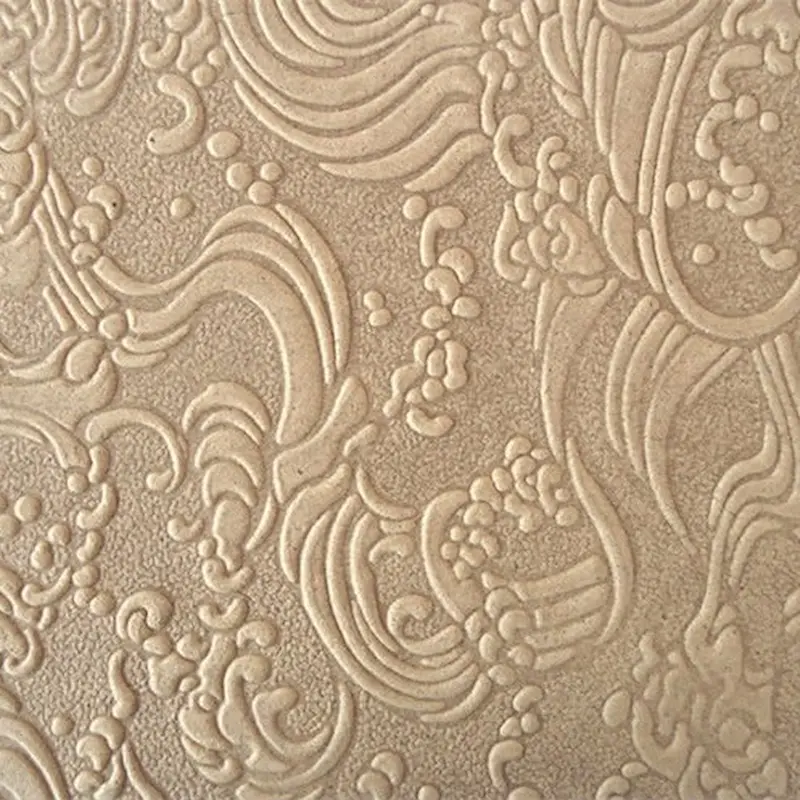
Description
Hard board: the dense, thin panel that does the hidden work
Hard board — high density fibreboard, HDF — is made the way MDF is made, but pressed harder. The same wood fibres are bonded and compressed at higher pressure into a dense, rigid panel with a smooth face and a thin profile. It is not a structural board and it is rarely the panel a project is designed around, yet it turns up in almost every fit-out: door skins, drawer bottoms, cabinet backs, the flat panel behind a wardrobe.
Its value is the combination of density and thinness. At 3–6 mm hard board does work that would need a much thicker MDF panel, takes paint to a smooth finish, and holds its shape without a frame behind it.
Technical specification
| Panel size | 1220 × 2440 mm |
| Thickness | 2 – 6 mm; other thicknesses on request |
| Density | High density, pressed above standard MDF |
| Surface | Smooth both faces, one face often pre-finished |
| Adhesive | E1 / E2; MR available for humid service |
| Grades | Standard, moisture resistant, fire retardant, decorative (laminated) |
| Finish | Accepts paint, laminate, veneer and printed decor |
| Origin | Shouguang, Shandong, China |
Where hard board is used
- Door skins — pressed over a hollow or solid core to produce a flush door face.
- Drawer bottoms and cabinet backs, where a thin, flat panel is needed without a frame.
- Furniture backs and dust panels in wardrobes and casegoods.
- Wall panelling and ceiling panels, plain or with a printed decor face.
- Underlay and substrate layers beneath resilient flooring.
- Packaging and automotive trim panels.
The four grades and when each applies
Standard is the general-purpose panel for interior work where no moisture or fire requirement applies. Moisture resistant carries a treated core for kitchens, bathrooms and utility areas. Fire retardant adds the same through-thickness treatment used in our fire-rated MDF, for linings that fall under a fire specification. Decorative grades carry a laminated or printed face and arrive finished, so a wardrobe back can look like a deliberate design decision rather than a hidden panel.
Working with a thin, dense panel
Hard board cuts cleanly with sharp tooling and takes a fine edge, but it is brittle relative to MDF — a thin panel spanning an unsupported opening will crack rather than sag. Support it at reasonable centres on both faces where it forms a back or a door skin. Fixings near an edge should be pre-drilled; the material splits if a screw is driven close to a cut edge without clearance.
Painting requires a primer on the cut edge as well as the face, because the edge absorbs far more than the pressed surface. For a thicker panel that can be routed and profiled, plain MDF is the better substrate; for door skins specifically, door skin is the same material produced to a door-facing specification.
Ordering, packing and delivery
Standard MOQ is one 20GP container with 15–20 days production after deposit, 30% deposit and 70% balance against documents. Thin panels are shipped flat in bundles with edge protection; because the board is dense and thin, weight per pallet is high relative to volume, which affects freight calculation.
Frequently asked questions
Is hard board the same as HDF?
Yes — “hard board” and “high density fibreboard” describe the same product in most trade usage. Both refer to a fibre panel pressed to a higher density than MDF.
Can hard board be used as a floor?
Not as a finished floor. It is used as an underlay or substrate beneath a resilient finish, not as a wear surface.
What is the difference between hard board and MDF?
Density and thickness range. Hard board is denser and produced in thin sheets; MDF covers 2–30 mm and is easier to machine into profiles.
Does it take paint well?
Yes, with a primer on faces and edges. The smooth pressed face gives a better painted finish than chipboard or OSB, which is why it is used for door skins and painted panels.
Requesting a quotation
Send thickness, grade (standard, MR, fire retardant or decorative), quantity and destination port through the contact form. The full hard board range covers the standard and treated grades.
Reviews
There are no reviews yet.