
Description
Hollow particle board: the core that makes a door light and straight
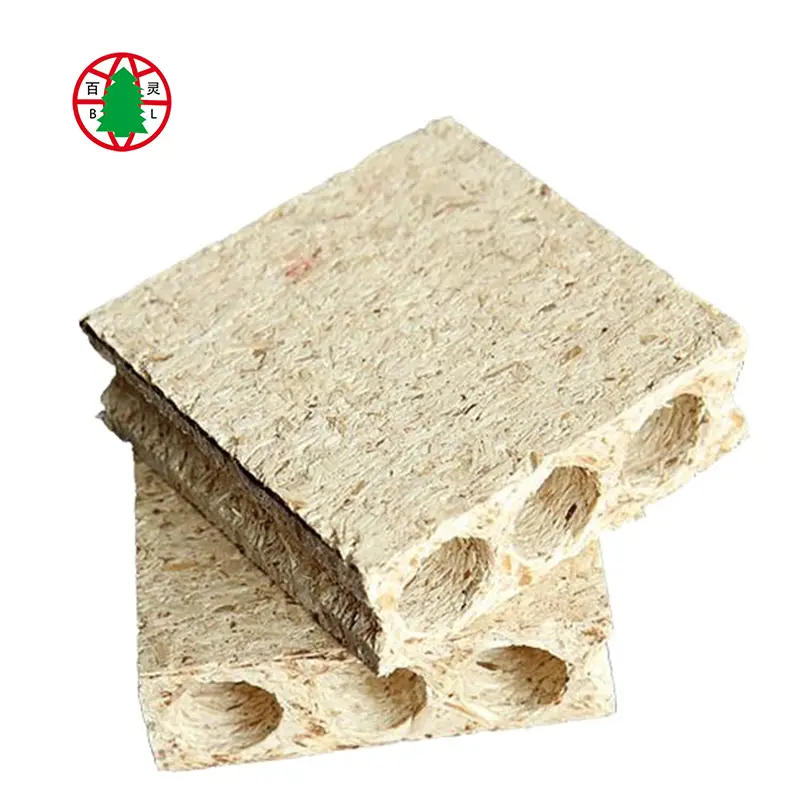
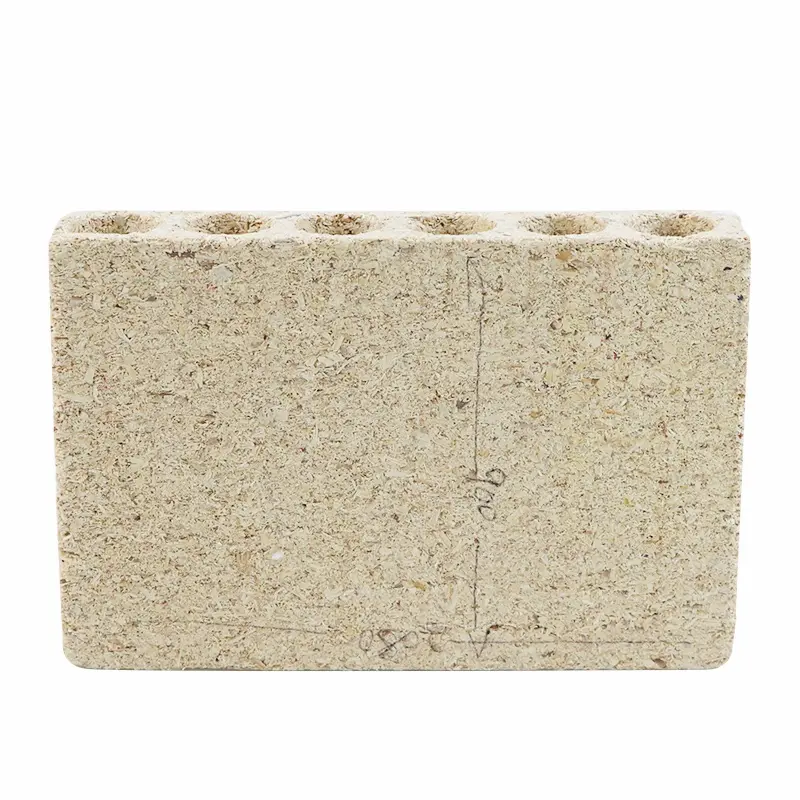
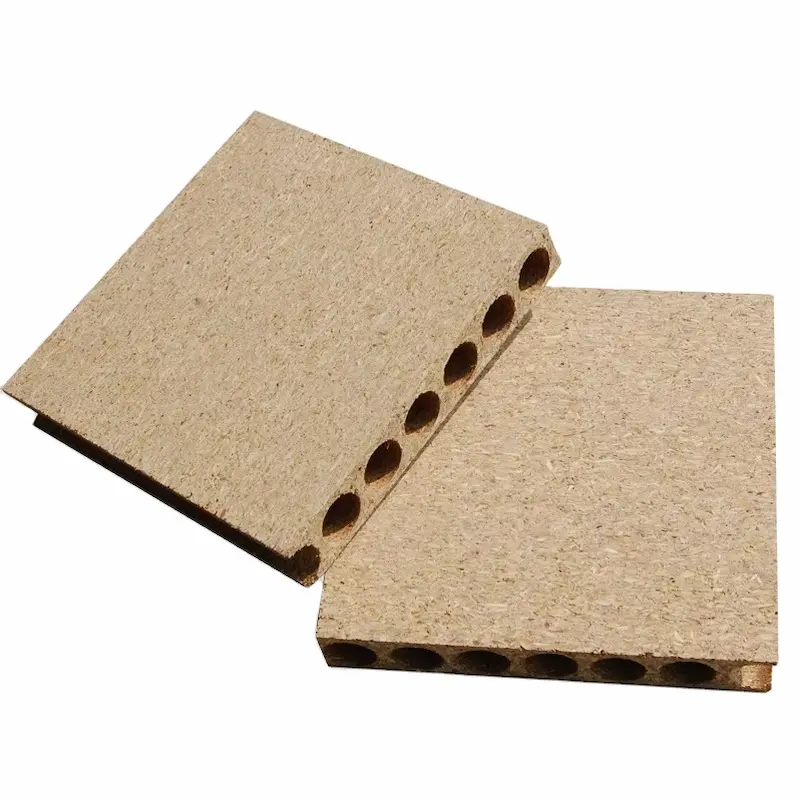
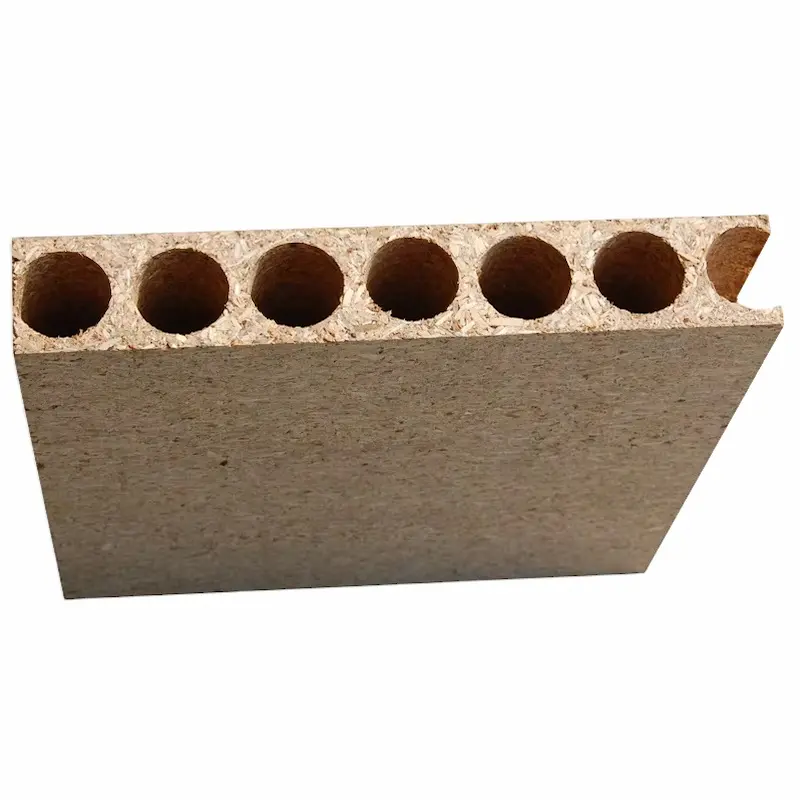
Hollow particle board is a thick, lightweight panel built around a hollow core, and it exists for one reason: to make a door that weighs less than a solid panel of the same size while still staying flat. At 28–40 mm it is thick enough to be a door core in its own right, and the hollow structure is what lets a 2.1 m leaf hang on two hinges without pulling the frame out of line.
This is not a cheaper version of standard particle board — it is a different product with a different job. Standard particle board is a flat panel for carcasses and shelving. Hollow particle board is a structural core for door blanks, where low weight and stiffness matter more than density.
Technical specification
| Panel size | 1220 × 2440 mm, 1830 × 2440 mm |
| Thickness | 28 – 40 mm |
| Density | 600 – 700 kg/m³ |
| Core | Poplar, pine or mixed wood, hot-pressed |
| Adhesive | MR, E0, E1, E2 or melamine glue |
| Surface | Finely finished, uniform; accepts facing veneer or laminate |
| Origin | Shouguang, Shandong, China |
Where it is used
- Door cores for flush and moulded doors — the primary application for the 35–40 mm thicknesses.
- Faced door blanks where a hardboard, plywood or veneer skin is applied over the core.
- Partition panels and wall linings where weight reduction is a design requirement.
- Lightweight furniture backs and panels that must span without load.
- Temporary and exhibition structures, where handling weight drives the specification.
Why weight matters in a door
A solid timber or MDF core at 40 mm makes a leaf that is heavy enough to require three hinges, a stronger frame and a stiffer closer. Every one of those is a cost, and every one is a potential failure point over the life of a building. A hollow core of the same thickness resists bending along the leaf but carries a fraction of the mass, which is why the door hangs true for longer and why the hardware is cheaper.
The trade-off is local strength: the core is hollow, so fixings must land on the solid framing around the perimeter or on an internal block. Hinge positions, lock blocks and closers need to be agreed with the door manufacturer rather than chosen on site.
Facing and finishing
The board is a core, not a finished door. It is faced with plywood, hardboard, veneer or laminate, and the facing is what takes the paint or decorative finish. Because the surface of the core is uniform and finely finished, adhesive bonds evenly and the face does not telegraph core texture — the defect that shows up as a washboard pattern under a gloss paint finish.
Edges need framing or lipping in solid timber to take hinges and to close the hollow. For a melamine-faced flat panel rather than a door core, see melamine particle board; for the higher-density structural option, OSB.
Ordering, packing and delivery
Standard MOQ is one 20GP container with 15–20 days production after deposit. Panels ship on export pallets with corner protection; because the board is thick and light, loading plans are volume-limited rather than weight-limited, which is worth noting when costing freight.
Frequently asked questions
Is hollow particle board the same as hollow core door?
No. The board is the core material; a hollow core door is the finished product — a core with facings, framing and lipping. We supply the core.
Can it be used as a finished wall panel?
Only with a facing applied. The board surface is prepared for bonding, not for decoration, and a bare surface will not take paint to a durable finish.
Which thickness for a standard door?
35 mm and 40 mm cover the usual leaf thicknesses. The exact core thickness depends on the thickness of the facing skins and the target finished leaf dimension.
How does it compare with a solid core door?
A solid core gives better acoustic performance and a heavier, more solid feel; a hollow core gives a lighter door that costs less in hardware and installation. For hotel corridors and fire doors, solid is normally required; for residential interior doors, hollow is the standard economic choice.
Requesting a quotation
Send thickness, quantity, destination port and the intended facing and door type through the contact form. The full particle board range covers flat panel, melamine faced and hollow core options.
Reviews
There are no reviews yet.