
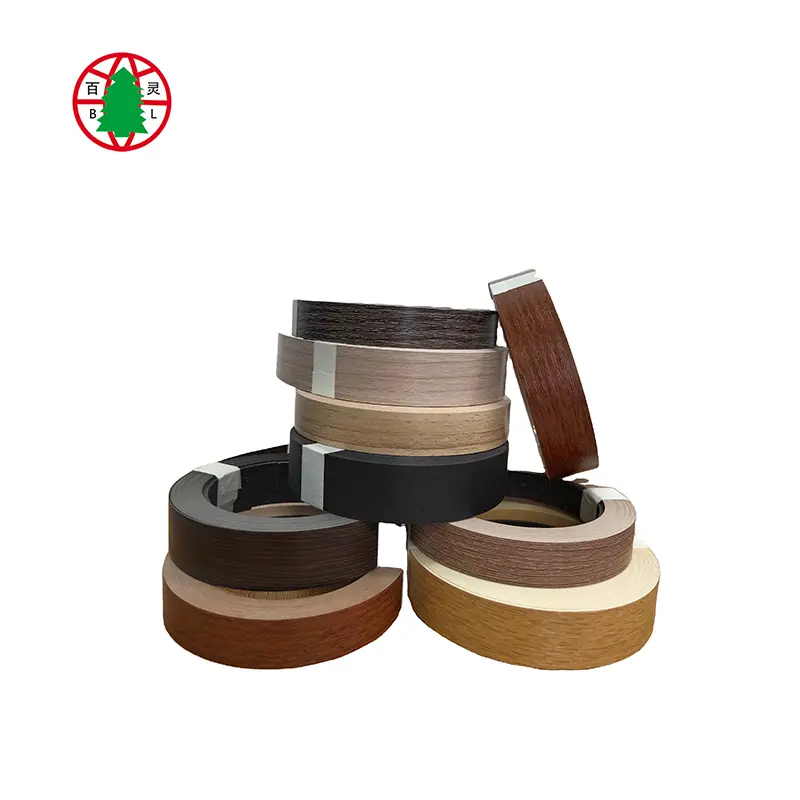
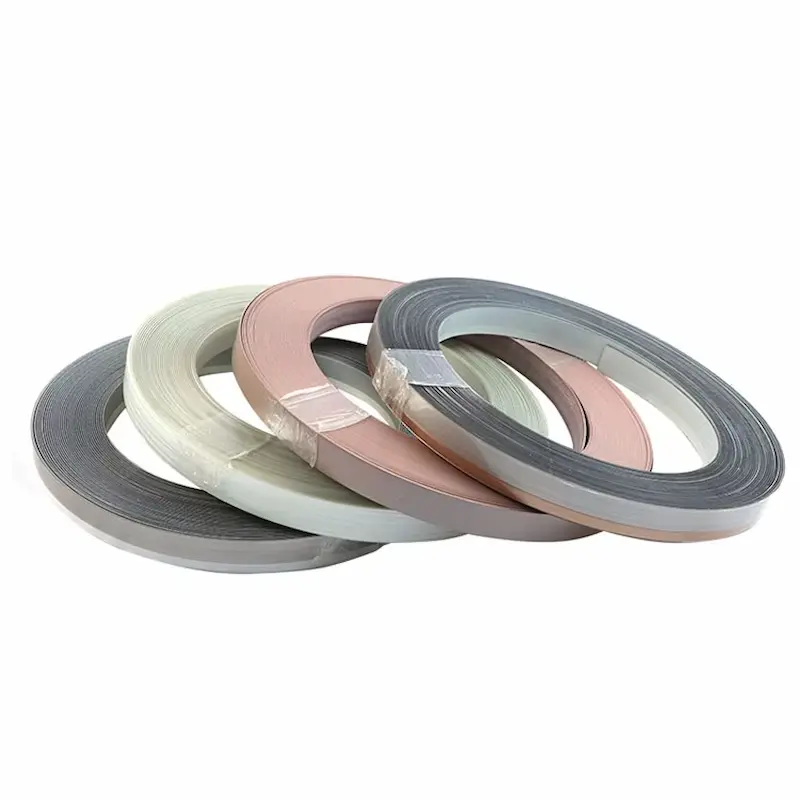
Description
Edge banding: the two millimetres that decide whether a panel looks finished
Edge banding is a thin strip of PVC or ABS glued to the exposed edge of a panel. It is the cheapest component in a piece of furniture and the one that most often determines how it is judged. A perfectly made carcass with a badly applied — or missing — edge band reads as unfinished; a modest panel with a clean, matched edge reads as a considered product.
It also does structural work. A cut panel edge is bare fibre, and bare fibre is where moisture enters, where the panel swells and where the melamine face begins to lift. Banding seals that edge, protects it from knocks, and covers a surface that cannot be sanded or painted to a finish.
Technical specification
| Material | PVC or ABS |
| Thickness | 0.1 – 0.2 mm; 0.2 mm for visible and high-wear edges |
| Width | Matched to panel thickness — 18, 22, 25 mm and upwards |
| Surface | Smooth or textured; matched to the panel decor |
| Grades | Standard, waterproof, eco-friendly, custom colour and width |
| Adhesive | Pre-glued (hot air / laser) or unglued for edge-banders |
| Origin | Shouguang, Shandong, China |
Where the specification is decided
- Cabinet and wardrobe carcasses — thin 0.1–0.2 mm banding in a matched decor.
- Worktops, tabletops and shelf fronts, where a thicker 0.2 mm band takes impact better.
- Kitchen and bathroom furniture, where a waterproof grade matters more than appearance.
- Office and contract furniture, where edges take the most wear in service.
- Door cores and door blanks, banded on all four edges.
Thickness: the part most buyers get wrong
0.1 mm banding is a covering — it hides the core and stops moisture ingress on a low-wear interior edge. 0.2 mm is a protective layer: it absorbs knocks, does not chip off at a corner, and holds its colour longer. Applying 0.1 mm to a worktop or shelf front is the single most common specification error, because the thin band fails at exactly the place the product is handled most.
The matched decor matters as much. Banding produced in a different batch from the panel will show a visible colour difference along every edge, and in a run of cabinets that reads as a fault line. Ordering banding with the panels, from the same batch, costs nothing and removes the problem.
Application: where banded edges fail
- Adhesion. The edge must be clean, flat and dust-free before the band goes on. Dust from the panel saw is the usual reason a band lifts after a few months.
- Temperature. Hot-air and laser banders need the specified adhesive temperature; running fast and cool gives a joint that looks right and fails later.
- Trim and radius. The band should be trimmed flush and radiused at the corner. A sharp untrimmed edge catches on everything and lifts.
- Ends. The two ends of a band on each edge are where lifting begins — cut them clean and, on visible work, seal them.
For panels that arrive pre-finished, see melamine MDF, melamine plywood and melamine block board — banding is specified alongside these in the same order so that decor and edge come from one production batch.
Ordering and delivery
Banding is supplied in coils sized to the panel thickness required. Send the panel decor reference, thickness and width, estimated linear metres, and destination port through the contact form. Standard MOQ is one 20GP container, with 15–20 days production after deposit.
Frequently asked questions
Should I use PVC or ABS banding?
PVC is the volume choice — cheaper, adequate for interior work. ABS is tougher, more resistant to impact and heat, and does not discolour as readily; it is the better specification for worktops, contract furniture and any edge that will be handled hard.
How do I match banding to my panels?
Send the decor code from the panel supplier. Matching by eye against a photograph does not work, and a near-match reads as a mismatch once it is applied along an entire edge.
Can banding be applied on site?
With a hand bander and pre-glued tape, yes, for small quantities and repairs. Factory application gives a more consistent result on production runs.
Does banding make an edge waterproof?
It seals the edge against normal humidity and occasional splashes. It is not a waterproof membrane — for wet areas, specify a moisture-resistant core and a waterproof banding grade together.
Requesting a quotation
Send thickness, width, colour or decor reference, quantity in metres or coils, and destination port through the contact form. The full edge banding range covers standard, waterproof and custom specifications.
Reviews
There are no reviews yet.